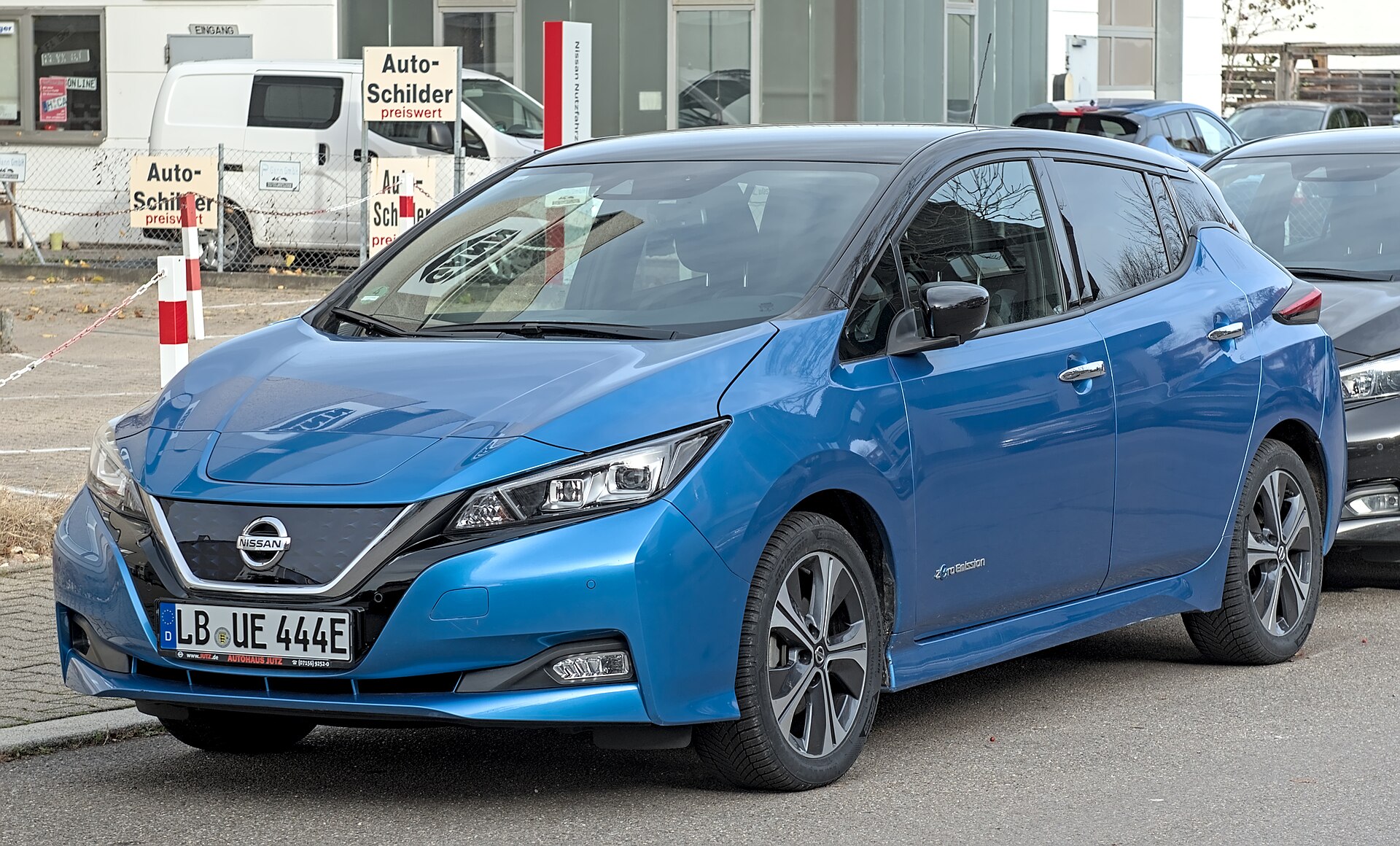
What this Leaf is and who it suits
This is a 2020 Nissan Leaf, a left hand drive electric hatchback with an automatic transmission and 41,000 km on the clock. It is a compact five door car built for city and suburban driving. For a trade buyer, it fits fleets that do short daily routes and return to a base where charging is available. It is not a long distance highway vehicle, so it suits urban taxi, delivery or pool car use rather than intercity transport.
The Leaf is one of the most common electric cars in the world, which helps when you need to explain the model to customers. It has no petrol or diesel engine, no gearbox fluid changes and no exhaust system. That simplifies some maintenance, but it also means the skills and parts needed are different from a conventional hatchback. Buyers who already run electric vehicles will find it familiar.
Living with it day to day
Ownership is quiet and smooth. There is instant torque from standstill, so it feels quick in traffic. The cabin is practical for a hatchback, with room for four adults and a usable boot. Charging is the main routine: most owners charge overnight at home or at a depot. If a buyer cannot charge where the car is parked, this model will be a poor fit, no matter how good the condition is. Ask the buyer where they will plug it in before you discuss price.
Range depends on battery health, driving style, weather and use of air conditioning. The 2020 Leaf was sold with different battery sizes in different markets, so do not assume a single range figure. Instead, check the state of health reading on the dashboard or with a diagnostic tool, and test the car on a route similar to the buyer's daily use. A car that shows a healthy battery and meets the daily route is the one to pursue.
Servicing and maintenance
Routine servicing is simpler than a petrol car. There is no engine oil, oil filter, spark plug, timing belt or exhaust to replace. Main items are brake fluid, cabin filter, coolant for the battery and power electronics, brake pads and tyres. Brake pads often last longer because the car uses regenerative braking. The 12 volt accessory battery still needs checking and will fail like any other car battery. Tyres wear faster on electric cars due to weight and torque, so budget for them.
The high voltage system should only be worked on by trained technicians. If your market has no such workshop, the car becomes difficult to support. Before you commit to a volume order, identify at least one independent garage or dealer workshop that will touch the high voltage battery and motor. Ask them what diagnostic tool they use and whether they can read Leaf battery data. If they cannot, you should not buy the car for resale in that market.
Parts availability and sourcing
Common service parts such as filters, brake pads, wipers and suspension components are widely available through aftermarket suppliers. Body panels, lights and interior trim are harder. They often come from donor cars or from Nissan's parts network, which can mean waiting. For a reseller, this matters: a car off the road waiting for a headlight or bumper is a car not earning. Check what your local parts importer already stocks for the Leaf before you buy.
Battery packs and electric motors are the big ticket items. Used packs are traded in some markets, but availability and condition vary. There is no single global price, so ask your parts supplier for a current quote on a used pack and a new one. If the difference is large, buyers will ask about battery health. A car with a weak pack may still sell, but only at a price that reflects the cost of replacement in your market.
Buying checks for trade buyers
Before you ship or resell, get a battery health report. This is the single most important number on a used Leaf. It tells you and your buyer how much capacity remains. Also check the charging equipment: does the car come with a portable charging cable, and which connector type does it use? Connector standards differ by region, so confirm what your market uses and whether an adapter is needed. Missing cables are a common and avoidable problem.
Check for accident damage, especially at the front and rear, because structural repairs on an electric car can be complex. Confirm the odometer reading and look for signs of flood damage. Ask for the service history and any battery reports. If you cannot inspect the car yourself, use a third party inspector who knows electric vehicles. The cost of an inspection is small compared to the cost of a bad battery or hidden crash damage.
Frequently asked questions
- How do I check the battery health on a used Nissan Leaf?
- Use a diagnostic tool or the dashboard display to read the state of health figure. A trained technician can also perform a capacity test. Always get this in writing before you buy.
- Can I service a Nissan Leaf without a Nissan dealer?
- Basic items like brakes, tyres and cabin filters can be done by any good independent garage. High voltage battery and motor work needs a trained technician with the right tools. Identify one before you buy.
- What parts are hardest to find for a used Leaf?
- Body panels, lights and interior trim are usually harder to source than service items. Battery packs and motors are the most expensive and may need to be ordered. Ask your local parts supplier what they can get.