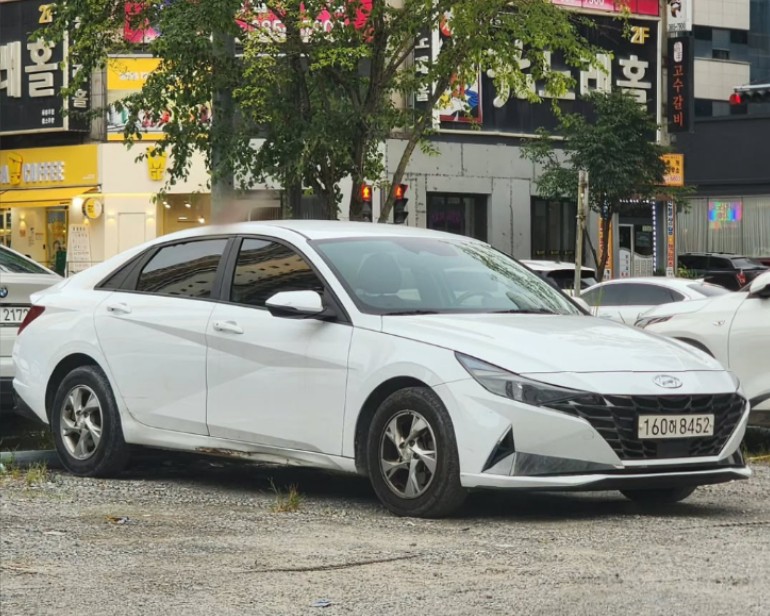
What this Elantra is
This is a 2021 Hyundai Elantra sedan with an automatic transmission and petrol fuel. It is left-hand drive and shows 31,000 km. That mileage is low for its age, which matters when you plan to resell or run it in a fleet. The Elantra sits in the compact sedan class, a body style that many buyers in Africa, the Middle East, South America and the CIS understand well. It is not a luxury car or an SUV, so set expectations around basic transport.
The Elantra name has been sold globally for many years, so most markets have seen it before. That familiarity helps when you describe the car to retail customers or fleet managers. Because it is a sedan, it offers a separate trunk and a lower driving position than a crossover. For importers, the key point is that this is a known model, not an obscure one. That reduces the time you spend explaining what it is to a buyer.
Living with it day to day
As a sedan, the Elantra is easy to park and maneuver in dense cities. The automatic transmission makes it simple for drivers who spend hours in traffic. Petrol fuel is widely available in most export markets, so you are not tied to a specific fuel network. The 31,000 km on this unit suggests it has not been heavily used, but you should still check the service history if you can. For a fleet, the automatic gearbox can reduce driver fatigue on long shifts.
The left-hand drive layout suits markets that drive on the right, which covers much of Africa, the Middle East, South America and the CIS. If your market requires right-hand drive, this car is not the right fit. For resale, the Elantra appeals to private buyers who want a compact car and to fleet operators who need a reliable commuter vehicle. It is not a heavy-duty off-road vehicle, so do not market it as one. Keep the pitch simple and accurate.
Service and maintenance
Hyundai has a broad service network in many countries, but you should confirm local coverage before you commit to a volume order. Ask your in-market partner whether they can source filters, belts, brake pads and fluids for a 2021 Elantra. Because the model is common, independent workshops often know it. However, you should not assume every market has the same parts availability. A quick check with a local parts dealer will tell you more than any general claim.
For maintenance intervals, follow the owner's manual or the schedule that Hyundai publishes for the region where the car will be used. Do not guess. If you plan to run the car in a fleet, set a fixed service schedule and stick to it. The automatic transmission may need fluid changes at certain intervals, so verify that with a qualified technician. Petrol engines generally need regular oil and filter changes. Keep records, because they help at resale time.
Sourcing parts for resale or fleet
Parts for the Elantra are often available through Hyundai dealers, aftermarket suppliers and used parts markets. The exact availability depends on your country and city. Before you import a batch, ask a local parts trader to confirm they can get common items like headlights, mirrors, bumpers and suspension components. If they cannot, you may need to stock some parts yourself. That adds cost and complexity, so factor it into your plan. Do not assume parts are easy to find everywhere.
For fleet buyers, keeping a small stock of fast-moving parts can reduce downtime. For resellers, being able to tell a customer that parts are available locally is a strong selling point. But you must verify that claim first. Contact two or three parts suppliers in your target market and ask for availability and typical lead times. If you cannot get a clear answer, describe the situation honestly to your buyer. A car with uncertain parts support is harder to sell.
Buying checks for trade buyers
Before you buy, inspect the car or have someone inspect it for you. Check for accident damage, rust, fluid leaks and warning lights. Verify the mileage on the odometer and, if possible, cross-check it with service records. Confirm that the transmission shifts smoothly and that the air conditioning works. These checks matter more than any spec sheet. A 2021 car with 31,000 km can still have hidden problems if it was poorly maintained or repaired after a crash.
Ask for the vehicle identification number and run a history check where available. Confirm the car is left-hand drive and that it matches the documents. If you are importing, check your country's rules on age, emissions and inspection. Those rules change, so use an official source or a customs broker. Do not rely on general advice. Once the car lands, you will need to clear it and possibly modify it for local rules. Plan those steps before you pay.
Frequently asked questions
- Is the 2021 Hyundai Elantra a good car for fleet use?
- It can be a practical choice for fleets that need a compact petrol sedan with an automatic transmission. However, you should confirm local service and parts availability before you commit to a volume order.
- What should I check before importing this Elantra?
- Check the vehicle history, mileage, accident damage and service records, and confirm it is left-hand drive. Also verify your country's import rules on age, emissions and inspection with an official source.
- Are parts easy to find for the Hyundai Elantra?
- Parts are often available through Hyundai dealers, aftermarket suppliers and used parts markets, but availability varies by country and city. Ask local parts traders to confirm they can supply common items before you import.